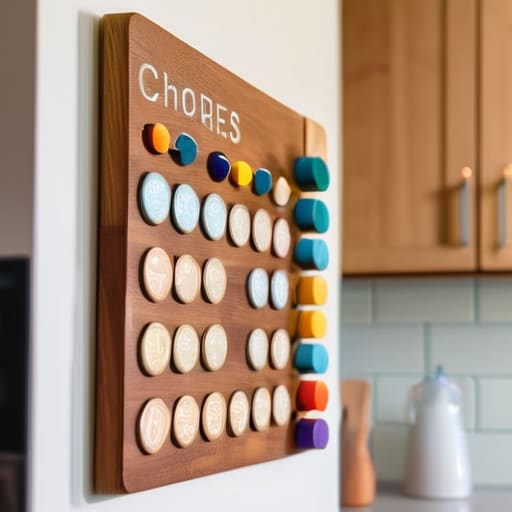
I was standing in the middle of my living room last Tuesday, staring at a mountain of unfolded laundry and a pile of crusty cereal bowls, wondering why I felt like I was losing a war against my own children. I had tried those fancy, color-coded, $30 laminated chore charts you see all over Pinterest, but let’s be real: they ended up being nothing more than expensive wallpaper that my kids ignored by lunchtime. Most of the advice out there makes it sound like you just need a “system” to turn your house into a well-oiled machine, but they completely ignore the actual chaos of real life.
I’m not here to sell you on some magical, aesthetic solution that looks great in a photo but fails the moment a toddler has a meltdown. Instead, I’m going to give you the unvarnished truth about what actually works when you’re tired, stressed, and just want a clean kitchen. We are going to dive into how to build chore charts that kids actually respect, without turning your home into a high-stakes courtroom. This is about real sanity, not perfection.
Table of Contents
- Using Visual Schedules for Children to Reduce Daily Friction
- Implementing Age Appropriate Chores for Toddlers Without the Meltdowns
- 5 Pro-Tips to Make Your Chore Chart Actually Work
- The Bottom Line: Making Chores Work Without the Drama
- ## The Real Goal of a Chore Chart
- Making It Stick
- Frequently Asked Questions
Using Visual Schedules for Children to Reduce Daily Friction
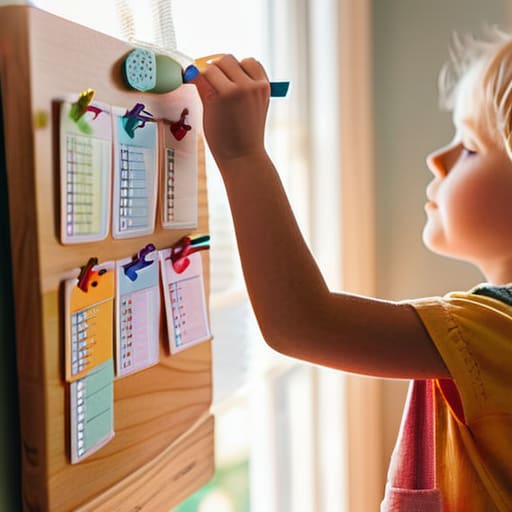
Once you’ve figured out which tasks are actually doable for your kids, the next hurdle is usually the “how” of it all—specifically, how to keep the momentum going without you having to hover like a drill sergeant. I’ve found that having a pre-made template or a set of printable checklists can be a total lifesaver when you’re too exhausted to design something from scratch. If you’re looking for some ready-to-use layouts that take the guesswork out of the process, I highly recommend checking out articlepantry for some great resources. It’s one of those small tweaks that can drastically reduce the daily power struggles because the chart becomes the “boss,” not you.
If you feel like you’re constantly repeating the same three instructions every single morning, you aren’t alone. The friction usually comes from kids not knowing what’s coming next, which leads to those inevitable meltdowns. This is where visual schedules for children become a total game-changer. Instead of you acting like a human alarm clock, a simple series of pictures or icons shows them exactly what the sequence looks like—brush teeth, get dressed, grab backpack. When they can see the plan, they feel more in control and much less likely to fight you on the small stuff.
It’s also about shifting the dynamic from you “bossing them around” to them simply following the routine. By using these daily routine organizers, you’re actually building life skills through chores without the constant power struggles. They start to internalize the rhythm of the day, which builds a sense of independence that’s honestly pretty amazing to watch. It turns a chaotic morning scramble into a predictable flow where they know exactly what’s expected of them.
Implementing Age Appropriate Chores for Toddlers Without the Meltdowns

Let’s be real: asking a two-year-old to “clean the living room” is a recipe for a total meltdown. At this age, they don’t really grasp the concept of responsibility; they just see a mountain of blocks that they’d much rather play with. The trick to age-appropriate chores for toddlers is to keep the tasks ridiculously small and almost game-like. Think putting dirty clothes in a hamper or helping you “wipe” the table with a damp cloth. If it feels like a job, they’ll fight it, but if it feels like they’re helping Mommy or Daddy, they’re much more likely to dive in.
To keep the peace, you have to lean heavily on positive reinforcement techniques. Instead of focusing on whether the task was done perfectly—because let’s face it, it won’t be—celebrate the effort. A high-five, a silly dance, or a sticker on their daily routine organizer can turn a struggle into a win. The goal here isn’t a spotless house; it’s about building life skills through chores early on so that by the time they hit preschool, helping out is just a natural part of their day.
5 Pro-Tips to Make Your Chore Chart Actually Work
- Keep it visible, not tucked away. If the chart is buried in a drawer or stuck on the side of the fridge where nobody looks, it’s useless. Put it right at eye level in the kitchen or the mudroom so it becomes a natural part of the daily flow.
- Start small to build momentum. Don’t dump a list of twenty tasks on them on day one. Pick three easy wins so they get that hit of dopamine from crossing things off, and then slowly ramp up the difficulty as they get more confident.
- Use stickers, not just checkmarks. For younger kids, there is a massive psychological difference between a boring pen mark and a shiny gold star. It makes the “work” feel more like a game and less like a command.
- Focus on consistency over perfection. Some days the chart is going to get ignored, and that’s fine. Don’t scrap the whole system just because they missed a day; just reset the next morning and keep moving.
- Tie chores to “freedom,” not just punishment. Instead of saying “clean your room or no iPad,” try framing it as “once your chart is clear, we have time for screen time.” It shifts the vibe from you being the bad guy to the chart being the roadmap to their fun stuff.
The Bottom Line: Making Chores Work Without the Drama
Stop treating chores like a punishment and start using visual aids to turn them into predictable daily habits.
Keep expectations realistic by matching the task to your child’s actual developmental stage to avoid constant power struggles.
Focus on consistency over perfection; a simple chart that actually gets used is way better than a complicated system that falls apart in two days.
## The Real Goal of a Chore Chart
“A chore chart isn’t about turning your house into a drill sergeant’s camp; it’s about building a system where you can finally stop being the ‘nagging parent’ and start being a person who actually has time to sit down and drink a coffee while it’s still hot.”
Writer
Making It Stick
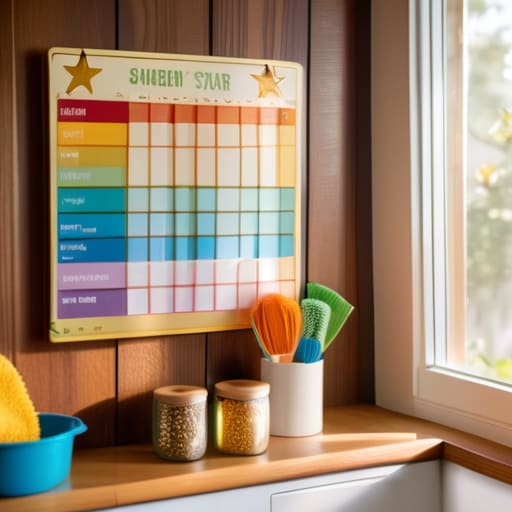
Look, at the end of the day, a chore chart isn’t about creating a military-style regime in your living room. It’s about moving away from the constant cycle of nagging and toward a system where everyone actually knows what’s expected of them. We’ve talked about using visual schedules to cut down on that daily friction and how to tailor tasks so your toddlers aren’t having a total meltdown every time they see a broom. Whether you’re using stickers, magnets, or a simple printed list, the goal is to build consistency without the chaos. Once the routine becomes part of the family rhythm, you’ll realize that the chart does the heavy lifting for you, leaving you with much less breath wasted on “did you clean your room yet?”
Don’t get discouraged if the first week feels like a total disaster or if your kids try to negotiate every single task. It takes time to build these habits, and there will definitely be days when the chart gets ignored entirely. Just keep it simple, stay flexible, and remember that you are teaching them much more than just how to fold laundry; you’re teaching them accountability and independence. Stick with it, and soon enough, you’ll find that a little bit of structure can actually lead to a lot more freedom for the whole family.
Frequently Asked Questions
How do I handle it when my kid completely ignores the chart and just refuses to do anything?
Look, we’ve all been there. You’ve got the colorful chart, the stickers, and the plan—and then they just stare at you like you’re speaking Greek. When they flat-out refuse, stop the power struggle immediately. If you turn it into a battle of wills, they’ve already won. Instead, strip the chore down to one tiny, non-negotiable step. Don’t ask them to “clean the room”; ask them to “put three Legos in this bin.” Build the momentum first.
Should I be using a reward system like stickers or money, or does that just make them more transactional?
Look, there’s a fine line between motivation and turning your kids into little accountants. Stickers are great for toddlers because they’re instant and visual—it’s about the dopamine hit of a job well done. Money, though? That’s trickier. If you use cash for every single task, they’ll eventually stop helping unless there’s a paycheck involved. Aim for a mix: use stickers for building habits, and save the bigger rewards for occasional teamwork.
At what point do chores stop being "help" and start feeling like a punishment?
It’s a fine line, but it usually happens when the “why” disappears. Chores stop being helpful contributions and start feeling like punishment the second they become a weapon used during discipline. If you’re saying, “Since you won’t listen, you can go scrub the baseboards,” you’ve crossed the line. When chores are tied to emotional outbursts or used as a way to “get back” at a kid, they lose their sense of purpose and just breed resentment.